Showing posts with label clutter. Show all posts

Sunday, February 20, 2022

All That Can Be Contained: A Book Reflection

Photo by Jake Nebov
on Unsplash

(This is Part 3 of a group of book reflections about the same book. Part 1 is here. Part 2 is here.)

As you may recall from the previous posts in this series, I've recently listened to the audiobook version of Decluttering at the Speed of Life, by Dana K. White (read by the author).

One of the central tenants of White’s book is something she calls the Container Principle.

The Container Principle is both incredibly simple and obvious, and deeply profound. I suppose most fundamental principles are, whether they were discovered by a monk in a remote mountain cave or a mother of three with a clutter problem.

The Container Principle states that any given container (be it a drawer, a cupboard or your whole house) has two fundamental aspects – two things that make it a “container”. The first is, obviously, that it holds things. The second is that it limits what can be held. It contains, in multiple senses of the word.

We have a tendency to forget about that second aspect. We keep trying to put more into our containers than they can hold, but you can’t really do that. If you try to put more into a container than it will hold, you will put the container and everything in it under stress, which could lead to damage. Or it will overflow, and everything will spill out, and then gets out of control.

White’s definition of clutter (and I am very much paraphrasing at this point, as it has been several weeks since I listened to her book and I can’t remember the exact way she phrased it) is something that is out of place, out of control and causing stress. If it has a place to be, but it’s not in that place, then it is clutter in this place where it isn’t meant to be. If there isn’t a place for it to be, then it’s just clutter.

If it doesn’t belong, it’s clutter. I’ll come back to this in a moment.

Things that are spilling over the confines of their container are, in a very real sense, out of place and out of control. When your threshold for this kind of clutter maxes out, you find yourself under stress. It’s very likely that the “things” that the container is supposed to hold are also under stress (you can’t squish too much into a given space before something gets squished), and the container might very well be under stress as well.

When the stuff you're trying to fit in the container gets beyond what the container can hold, then the best and most sensible thing you can do to make sure things are properly cared for and don’t get damaged is to scale back so that you only have what will fit in the container.

Take it all out and evaluate it – as a whole, and in relation to everything else you wanted to put in that container. Don’t just look at each thing on its own and say “I want this”, look at each thing in relation to all the other things and say “I want this more than that”. Prioritise the most important, the best, your favourites – these go into the container first.

When the container is full, everything else that isn’t already in the container doesn’t fit. It wasn’t a priority, or it would already be in the container, and therefore it doesn’t have a place. It doesn’t belong in the container. So, if it doesn’t belong, it’s clutter.

If you want to avoid putting the system under stress, you have to be able to accept that you can’t keep everything all the time. If this thing that doesn’t fit isn’t more important, more loved or more useful than the things that are already in the container, then it has to go. And quickly – don’t leave it to become a burden.

Whenever you think of adding anything new to that container, you have to consider it on a “one-in-one-out” basis. Is it more important, useful or loved than something that is already in the container? If not, don’t bring it into your life. If it is, then the less important/loved/useful thing has to go.

You might think the obvious solution is to get a bigger container, but space isn’t infinite. A bigger container for this means there’s less space for something else. If you dedicate a second drawer to hold what doesn’t fit into one drawer, then you have less drawer space for what would otherwise have gone in the second drawer – you’ve moved the problem, you haven’t solved it.

White was talking about drawers and cupboards, but many things in our lives are containers.

Time is a container. Your mental or physical capacity is a container.

Any given container can only hold so much. You can only do so much in a day. You can only make so many decisions. You can only keep on top of so many tasks.

It’s harder to see these containers and their capacity (and certainly a lot harder for other people to see them and respect their limitations), but it’s actually quite easy to tell when they’ve been overstuffed and can’t hold what you are trying to contain: they are under stress, over flowing and getting out of control.

If you get to the end of your work day and you feel you have to stay back and keep working because you could not do everything you “had” to do today, then there is too much in your work day. It spills over and puts the system under stress. There are only so many hours in the day, so if you spend more time at work, there’s less time to spend doing all the things you “have” to do at home. You have a smaller container to try to fit your domestic tasks into. And so that spills over and takes time away from unwinding so you can get some rest…

So of course you feel like your days are overflowing and you have so many things you couldn’t get done today. You’re trying to fit too much into your day, and there are limits to what your container can hold.

If you find you are doing this every day, then there’s a bigger container issue at play. You’re trying to fit too much into something else. Perhaps your job has too many tasks to complete? If it’s more than you can do in the time you have available, then it’s too much work to fit into your job. If the “job” is supposed to fit all of this work into it, but it doesn’t, then perhaps that job doesn’t fit into your capacity – it doesn’t fit into your life.

We don’t like to think about this – we don’t like to admit it. We think we should be able to fit these things in, so we refuse to accept we can’t. We think we need to keep cramming stuff into the container until the container finally grows enough to accommodate all of it.

But that’s not how containers work. There are limits to what they can hold. If you keep pushing them beyond their limits, something is getting damaged, even if nothing obviously breaks.

So we need to look at everything we’re trying to fit into that container. We need to see everything in terms of whether it is more deserving of a place in that container than something else. We have to prioritise what is most important, most useful, most loved. And when the container is full, we have to be willing to say “there is no place for this – it wasn’t a priority and it doesn’t fit.”

And then we have to find a solution to that which doesn’t involve us continually trying to cram it in. Something that leaves us with enough space in our lives that we can actually enjoy what we have, rather than stressing about what is overflowing.

We also have to look at every new thing in relation to what is already in the container, and be honest about whether it’s more valuable to us than something that is already in there. Then we have to let something else go.

And that’s the hardest thing, I think. We’re so used to pretending we can do it all; we struggle with admitting we can’t and telling people that this is beyond what we can do. Also, we know everyone is in the same boat – everyone is stressed out trying to fit it all in and do all of the things. For some unfathomable reason we see that as a reason for why we should keep struggling, instead of realising we’re all making a mistake.

What if…

What if we gave each other permission to only do what we can – to stop trying to cram in more than our containers can hold? What if we gave ourselves permission to do this, and extended this kindness to everyone around us?


Thursday, February 3, 2022

My Home is not the Tip: A Book Reflection

publicdomainvectors.org

 (This is Part 2 of a group of book reflections about the same book. Part 1 is here, part 3 is here.)

As you may recall from the previous post, I've recently listened to the audiobook version of Decluttering at the Speed of Life, by Dana K. White (read by the author).

Like Part 1, this is more about a revelation inspired while/by listening to White's book, rather than necessarily something she said in the book itself - although she did touch on it closely enough that I feel it's legitimately something from the book.

At one point, White was discussing the fact that we (well, some of us) feel guilty about throwing things in the bin if there's any chance it could be put to use somehow. Perhaps we can turn that frayed T-Shirt into a craft project and give it a second life. Perhaps someone who is desperately poor will be desperate enough to want because it's better than the crap they currently have.

She didn't go all out and say this, but it was strongly implied: poor people don't deserve your trash just because they're poor. What she did say is something well worth saying: don't give something to charity that you wouldn't be willing to give to a friend.

If you ever do feel the compulsion to try to give something you regard as unworthy of your own friends and family to a poor person because "surely some one truly poor will be truly grateful", image that instead of saying "poor person" or "someone in need" you said "peasant." Because that's sort of where that mentality evolved from: the peasants should take whatever we give them and be grateful. Let's not be that person.

But the main reason most of us feel a need to hold onto something that's not completely in rags is the fact that we don't want to be wasteful. We want to try to find a way to keep it out of the rubbish tip by finding a way to reuse or recycle it. Surely?

That's a real problem I struggle with. I want to reduce the amount I throw in the bin by being less wasteful, so I hold onto something that could potentially turn into something else. But...

Many years ago I read an article (I wish I could remember the author - or even the source) written by a young mother, who had started using a mantra: "I am not the kitchen bin". She didn't want to waste the food her kids weren't finishing, or the scraps she had cut off the food she was preparing for a meal, so she'd eat them. She was gaining weight and her health was suffering, and one day she realised that if she was putting something into her own body to keep it out of the bin, then she was the bin. She had to get over her guilt about waste and respect her own body and boundaries instead.

"I am not the kitchen bin."

I've often thought of that over the years, as I've found myself eating food after I was full just because there wasn't enough to put aside as left overs and it seemed a waste to throw it out. Or as I ate something I had actually ruined and wasn't enjoying at all, simply because I'd made a batch of it and didn't want to be wasteful.

But I'm not the kitchen bin, and I'm not doing myself any favours by putting something in my face that I should be putting in the bin.

As I was listening to White talk about rubbish and the guilt we sometimes feel about throwing out something that could, potentially, maybe, some how, by some stretch of the imagination, be "still good", I suddenly realised:

"My house is not the rubbish tip."

If I'm not doing something with this rubbish, but just holding onto it in the hope that I find something to do with it later, I'm using my own house to store landfill. This is not, in any tangible way, less wasteful that sending it to the actual landfill (where at least they might do something to reduce its size, as the professional rubbish people are always looking for ways to handle rubbish volumes better). It's just sharing the rubbish between the tip and my house.

You "reduce" rubbish before it comes into your house. You look at anything you're thinking of buying for its potential rubbishness and you either come up with a better idea then and there, or you accept that you're going to be throwing something away.

This is something I really have to focus on: not keeping things I should throw away (because I don't like throwing things away), but rather making better choices at the start of the process so I don't get stuck with choices I don't like when that item has reached the end of its life.

I am not the kitchen bin, and my house is not the tip.

Friday, January 25, 2019

On Magical Tidying, Or: Molly Vickers Wets Her Nickers


I'm currently reading Marie Kondo's book (which you may have heard of) about tidying up, largely because I recently bought a Kindle and I was looking for a few different things to load up before going on holidays.

Momentary digression to talk about ebook readers: 

I bought a Kindle partly to try this whole ebook reader thingy, and partly because I noticed a few books I was interested in reading were way cheaper and easier to obtain by Kindle than by traditional means (i.e., ordering it from the other side of the planet). However, I just remembered one of the reasons why I hadn't bought an ebook reader ages ago is the fact that I can't lend the books or give them away after reading them, and that sucks.

Back to rambling on about Kondo's book: 

So, this woman clearly has deep seated issues and probably should have had some sort of intervention when she was a child. She talks about how much "freedom" she had as a middle child, whose parents were busy looking after the youngest and whose brother completely ignored her to play video games, and how she used that freedom to develop an obsession for housewife magazines and form a life-long passion for tidying up - and yet spent most of her childhood and youth feeling that no matter how much she tidied, her room never seemed tidy enough.

Essentially, she's a person who was raised by Home Beautiful magazines and has developed a tidying mania as a way to exert some control over her life. And yet she's made a bucket load of money from her *ahem* "passion", so while she might be insane, she's certainly not crazy.

And that's how I'd sum up her book really – insane, but not completely crazy. Reading her book is an interesting rollercoaster that goes a little something like this:

"This woman is nuts! Oh, actually, that's a really interesting idea. Nope, this is just loony. Oh, I can see how that would work. I should give that ago... aaand it just went seriously weird again."

For example, she suggests storing things vertically rather than in piles, because you can easily see what you have and how much you are accumulating. Interesting idea, and I could see how it would work. She suggests storing your laptop like it's an actual book – I hadn't thought of that before but I like it. And then she tells us she loves carrots to pieces and she stores them vertically in her fridge, keeping them in cup holders so they can stay upright.

Why? Why would you go out of your way to store carrots vertically? Why would you tell thousands of people that you store your carrots vertically? Surely this sort of thing is between you and your carrots?

I'm also concerned that there doesn't appear to be any kind of charity shop in Japan, because she spends a lot of time telling you to throw out clothes and books that don't "spark joy", but never once suggests donating items that are still in good condition to charity. It's straight into the bin bag, if you please. This seems strange, because surely it would be easier to let go of something that's "still good" if you knew someone else might appreciate it more than you?

Speaking of books, she clearly doesn't have the soul of a librarian or archivist. That's okay, not everyone does, but some people do and that's going to play havoc with her "if it doesn't spark joy, toss it out" approach to weeding your book collection or paperwork.

I used to be the kind of person who had to keep every book I've ever owned. When I moved to Tasmania, I took boxes and boxes of books with me – and left more at my family home because I couldn't part with them. And then I lumped them all back when I moved back to Queensland.

I'm getting better at this, and over the years I've weeded a lot of my collection. I'm planning another big cull shortly, where I'll be saying goodbye to quite a number of books that used to mean something to me, but don't belong to the person I am today.

We change a lot over the years, but we keep hold of things for older versions of ourselves because they meant something to us, once. But the truth is, we need to let go of what once mattered to us in order to have space in our lives for new things – or for nothing. Sometimes we need to simply take a break from having things and have a bit of free space for a while.

And yet I know there is one book I'll probably be keeping even though it doesn't "spark joy" and doesn't mean anything to me any more. I've tried to get rid of that book through several successive culls, but I keep fishing it out of the pile and putting it back in my bookcase.

It's called Voices: An Anthology of Poetry and Pictures, edited by Geoffrey Summerfield, and every time I look at it I wonder why I've kept it all these years. And then I remember. I've kept it because there's a poem in that book called "Child's Bouncing Song" written by Tony Connor.

This poem starts with the line "Molly Vickers wets her nickers" and the poem is burned into my brain for reasons I can't explain (we all have our childhood obsessions, mine was poetry – sadly I haven't worked out how to make a fortune out of that, yet). However, I keep stuffing up the two stanzas before the last one. I don't know why. All I know is, every few years or so I'll start reciting that poem in a moment of absent mindedness, and then I'll get to the point where I can't remember if the next line is "High and low and/ to and fro and/ down the street and up the hill" or "Mister, mister,/ Shirley's sister/ won a prize at Blackpool prom."

It will drive me nuts, until I find that blasted book and remind myself how the last half of that poem goes. So while the book doesn't "spark joy", and I'd happily part with it otherwise, I can't get rid of it.

Now, I know what you're thinking: "just photocopy that poem and keep it somewhere". Nice idea, but unfortunately my brain is now broken. Once upon a time I could "accidentally" memorise sections of poetry, and deliberately memorise passages the length of entire chapters. I can't do that any more – my brain elasticity has gone and lost its rebound. I can't remember where I move things to. I try to move them to a more logical place, but I may as well move them directly into a black hole.

So, maybe Konmari's method might actually work for that. A) have next to nothing in the first place, b) put everything in the same category together, so that you just need to go to the place where everything is and look for the scant few things that you still have.

Or, maybe I just need to leave Molly Vickers to dry off somewhere, and decide that I'm okay with never remembering the order of those two stanzas.

Thursday, October 1, 2015

Things found in notebooks: Advice for conference papers

I'm cleaning my desk.

I've been wanting to clean my desk for quite some time.  I've been very slowly decluttering it on and off for a few months, but I've reached the point where I must clear the decks and dust (and dust, and dust and dust), and wipe away the dirt and grime.

I'm also finding all sorts of pieces of paper I kept for some unfathomable reason, and a bunch of half-filled notebooks from over the past 7 years or so (and I haven't even gotten anywhere near my filing cabinet yet).

One notebook I'm just going to throw out (even though it still has plenty of blank pages) is the one I used for a course I did back in 2011.  There's a spot of interesting advice in it, though, and I'm noting that here because I think it's worth noting somewhere:

"Never do the conference paper first."

The woman who gave us this sage advice noted that conference papers were easily adapted from journal articles, but journal articles disappear from your list of "things I can actually muster up the energy to do" once the conference is over.

If you write the journal article, then adapt it for a conference, you're then just left with the task of finding a publisher for the article, rather than doing all of the work for the article.

Having recently co-written a conference paper that we were totally going to turn into a journal article to get published (totally), and then singularly failed to put even the smallest amount of work into writing the article, I can see her point.

Tuesday, April 21, 2015

What you know to be useful, or what you believe to be beautiful

I'm reading a book about decluttering at the moment: It's All Too Much: Living a Richer Life with Less Stuff, by Peter Walsh.  I'm only a few chapters in, and I'm finding it a bit repetitive, to be honest.  Much like an American TV show, it seems to be written on the basis that you can't quite remember what was said ten minutes ago, so repeating it can't hurt none...  But the advice isn't bad.

Yes, once again I'm looking at my surrounds and thinking "why do I have all this stuff?"

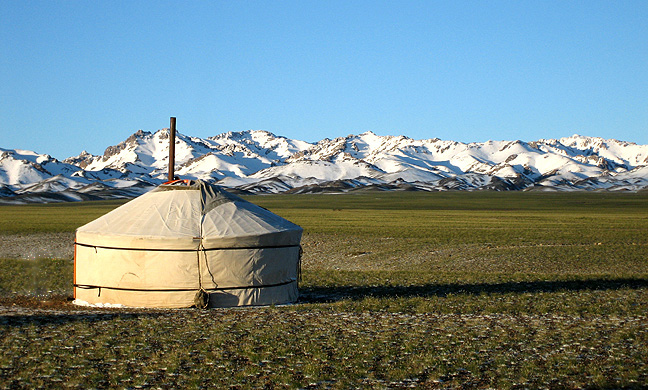
Regular readers may remember my previous daydreams about moving to a yurt and only owning whatever I need that could fit comfortably within that circular, tent-like abode.  Of course, I'm still completely surrounded by things and am no-where near ready for a yurt-ish existence.

Walsh frequently quotes William Morris's edict that you should "have nothing in your houses that you do not know to be useful, or believe to be beautiful," which I think is a lovely way to think about decluttering.

For one thing, it gives me a good justification to keep my favourite toys - I believe them to be beautiful.  On the other hand, it also gives me a good set of criteria to use to weigh up the merits of everything else in my house:
  • Is this useful (Y/N)?
  • Is this beautiful (Y/N)?
  • Is this awesome (Y/N)?
Okay, the last option wasn't part of the original equation, but let's be honest - anything that makes you think "this is totally awesome!" gets a place in your life even if it's hideous and pointless.

I've been thinking a little about weeding lately - in a library context.  I'm on a newly formed "space force", which is keeping track of the use of the space in the building and thinking deep thoughts about what needs to be moved around.

One of the things we're doing is looking at specific, discrete collections and thinking about how the space in those areas are being used (like the Reference Collection, the Curriculum Collection and the Scores Collection).

I know Walsh's book is supposed to be used to help you declutter your house, but I'm starting to wonder what would happen if we applied it to our library.

Walsh advises people to start the decluttering process by completely ignoring the clutter, and instead thinking about a core question:  "What is your ideal life?"

Then, you need to think about each room in terms of: "In my ideal life, what would this room be for?  What would it do for me?" and then regard everything that is in the room with that ideal living space in mind.

That sounds like an interesting way to approach a special collection that has been kicking around long enough to get decidedly unwieldy:

"In my ideal library, what is this collection for?  What would it do for my users/patrons?  What belongs in that ideal space?  What would it look like?"

Then, with the ideal as the goal, reconsider everything in that space (including the shelving) with those core criteria:

Is it useful/beautiful/awesome?

Do we have the guts to do it?


Thursday, October 9, 2014

The Yurt Game

And the word of the day is:  Yurt.
GurvgerCC BY-SA 3.0

I was chatting to one of my colleagues earlier about being in a "decluttering" phase (yes, I know how futile that is when you happen to be a very cluttered person), and I said I was trying to prioritise what I would want to keep if I had to move into a yurt.

She had never heard of a yurt before, so we spent several minutes looking up pictures of various yurts from the traditional tents of nomadic Asian tribes people to the "glamping" monstrosities of today.

There's a game I've been playing as I've been trying to sort out my bookshelves, and I invite you to play a similar game in your homes:

Say you had to move from your house into a yurt.  You can make up your own reason for why, that's not the important thing.

The important thing is that your yurt doesn't have space for your bookshelves.  You have stubbornly insisted on having at least one book shelf, but that's all you get.  One.  Singular.

If you are anything like me, you probably have several bookcases scattered around your house, each at various levels of fullness.  Imagine you have to reconcile all of those books to just one shelf.

I mean every book - fiction, how-to manuals, cook books, reference books... the lot.  Whatever you can fit on one shelf of one of your current bookcase is what you get to keep.

Now, before you start thinking about your answer to this question, remember that libraries exist.  And you probably have friends with similar reading tastes.  The vast majority of books currently taking up space in your house could probably be borrowed if you really wanted to see them again.

So, what goes on the shelf?

Books that are irreplaceable.  Books where that specific copy has some deep meaning to you.  Books you use all the time or consult frequently.  Books that are so close to your heart that you can't imagine any home of yours not having this book in it...

Tell me about a no-brainer - a book you know would definitely be on that shelf.  You can put it in the comments for this post, or submit it to your social media platform of choice with the tag #yurtbooks.

It will be interesting to see what matters to you.

Newest post

The Western Novella

On my recent flights to and from Brisbane, I finally got around to reading a Cleveland Western novella I've apparently had in my handbag...

Popular posts